Chapter 02Why stevia
Less sugar. Same sweetness.
Consumers everywhere are cutting back on added sugar and looking for recognisable ingredients that are closer to nature. Stevia meets both needs.

A sweetener that grows on a plant.
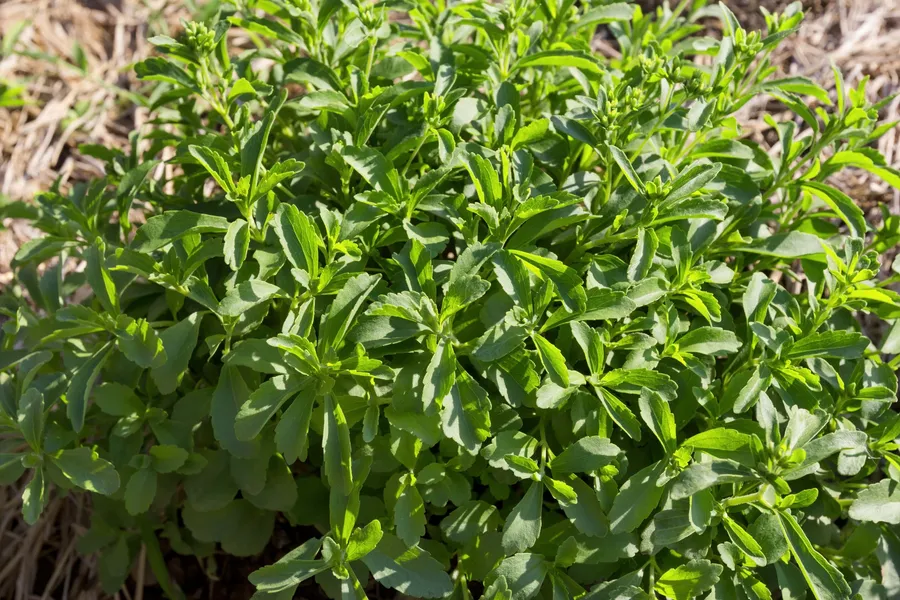
Stevia belongs to the daisy family and is native to north-eastern Paraguay. People have sweetened food and drink with its leaves for hundreds of years.
The leaf contains sweet compounds called steviol glycosides, up to 300 times sweeter than sugar, and stevia adds zero calories. Stevia-based sweeteners have quickly become the favourite high-intensity sweetener because they are heat-stable, calorie-free and suit a wide range of applications.
Higher usage levels can be challenging. With Central Queensland University, we're studying how different steviol glycosides interact, which opens the door to new innovation.
The benefits
Why manufacturers choose stevia.
Sugar brings sweetness, plus nutritive, sensory, physical and preservative properties. Cutting it while keeping taste, texture, appearance and a clean label is hard. A broad portfolio gives you the choice to get it right.
- 01
Sugar reduction
Enables sugar reduction of 50% and more, even in challenging applications, without sacrificing taste.
- 02
Label-friendly
Derived from the best-tasting parts of the stevia leaf, so consumers see a recognisable, plant-based ingredient.
- 03
Cost-effective
Less need for masking agents. Our formulation experts help you meet your cost-in-use goals.
- 04
Heat-stable
Steviol glycosides are stable up to 200 °C, so they hold up in baking, pasteurising and cooking.
1 stevia leaf ≈ the sweetness of up to 300 grains of sugar
The story of stevia is still evolving.
Research, development and innovation have produced natural stevia variations for many food and beverage applications, overcoming the taste limits of early stevia sweeteners.
- 2008
Early stevia ingredients
When high-purity stevia extracts first reached the market, they were mostly Reb A, the most abundant sweet molecule in the leaf. It sweetened many products well but could leave a lingering aftertaste, depending on the product and how much sugar was removed.
- Then
Discovering new extracts
Research showed that Reb A is only one of dozens of sweet molecules in the leaf. Each has its own taste and performance, including a more sugar-like taste, better mouthfeel and less bitterness. We now know how to combine them for modest to deep sugar reduction.
- Now
Better leaf = better taste
We went back to the plant itself. Using traditional cross-breeding, we focus on varieties richest in the most sugar-like parts of the leaf. Extracts from these varieties support deeper sugar reduction without compromise.
Your competitive advantage.
With CQUniversity scientists, Australian Stevia is studying the unique properties of the stevia leaf.
- A.
Broad portfolio
A range of stevia sweeteners to fit your application.
- B.
Formulation expertise
Proven know-how and deep market insight.
- C.
Consistent quality
A rigorous specification process that keeps quality consistent in every growing season.
Enquiries · Supply · Samples
Let’s grow something sweet.
Tell us about your product and volumes. We’ll come back to you about supply, samples and formulation support.